W2 SIGNAL // AI MATHEMATICS
THE SHIFT: AI IS BEING USED TO SOLVE OPEN PROBLEMS THAT HAVE Stood For CENTURIES
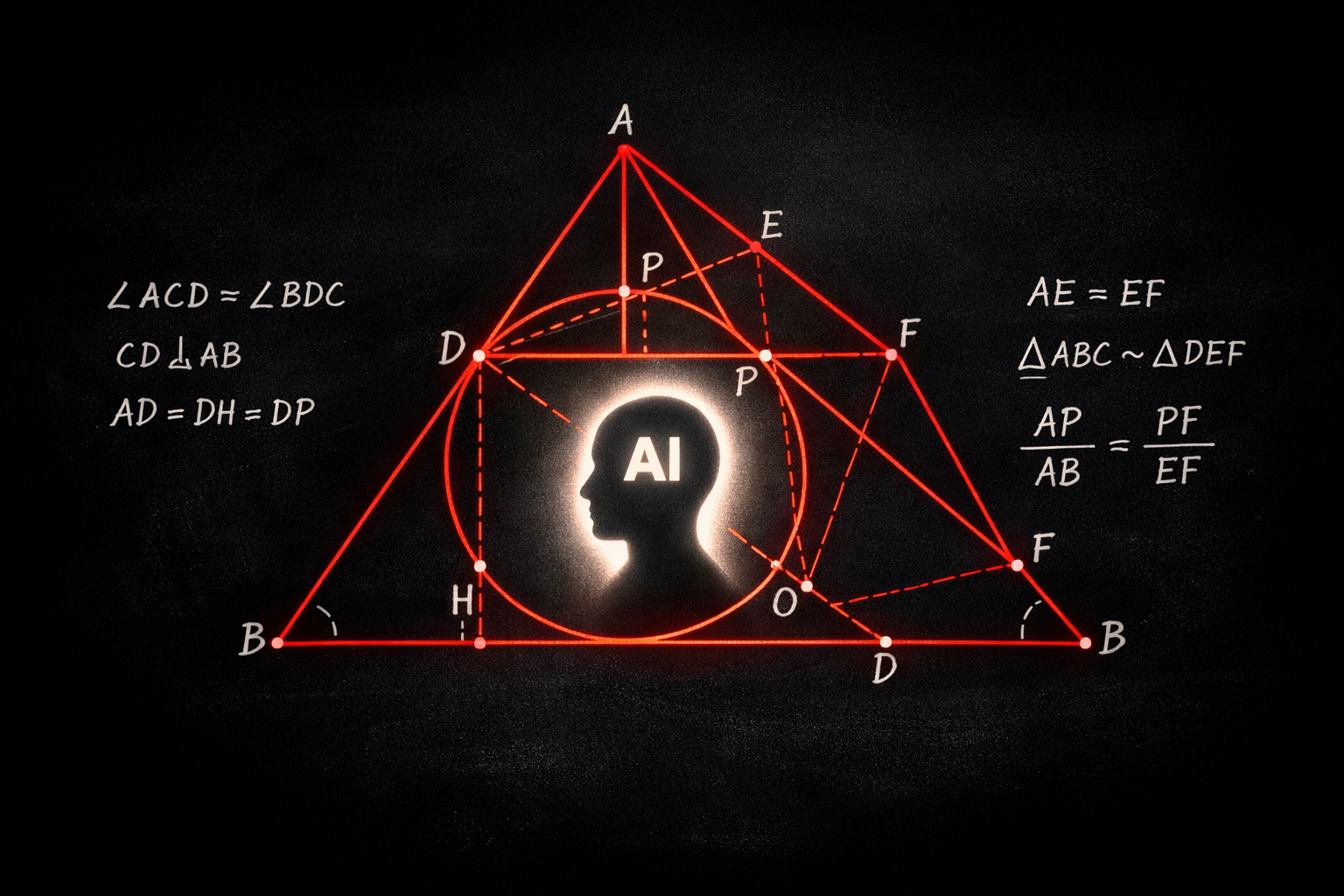
The OpenAI math engine has stepped into public view. OpenAI just let the world peek at the output of a still‑under‑wraps model that has generated 722 research‑style manuscripts, covering 372 families of mathematical results. Those papers contain full‑proof solutions to hundreds of questions that have resisted human effort for decades. In short, a single AI system is now capable of producing new, peer‑level mathematics at a scale no human researcher could match.
WHAT HAPPENED
After months of quiet internal testing, OpenAI released a public GitHub repository that hosts the 722 manuscripts. Each document follows the conventional structure of a mathematical paper—abstract, theorem statements, proof sketches, and references—yet the core insights were generated by a frontier model that has never been released to the public. The OpenAI math engine, internally dubbed “Mathematical Engine 3,” was trained on a massive corpus of scientific literature, formal proof libraries, and symbolic computation data, then fine‑tuned with reinforcement learning from human mathematicians.
The release is more than a showcase; it’s a proof‑of‑concept that AI can explore the vast combinatorial space of conjectures, test them against known results, and produce rigorous arguments that pass basic verification. The effort was overseen by the newly formed AGMAI (Academic Group for Mathematics AI), a panel of leading mathematicians tasked with ensuring the results are responsibly communicated.
“We have witnessed the first time an AI system independently produced a complete proof that resolves a question that has been open for over a hundred years.” – Dr. Elena García, member of AGMAI
WHY IT MATTERS
Mathematics is the language of science, engineering, and economics. A breakthrough in pure math can cascade into new encryption methods, more efficient algorithms, or even better models of physical phenomena. By automating the discovery of proofs, the OpenAI math engine could accelerate every field that depends on mathematical insight.
Beyond the practical upside, the release raises profound questions about the future of research ethics. If a model can generate a proof faster than a human, who owns the intellectual property? How do peer‑review processes adapt when the “author” is a piece of code? The AGMAI advisory board is already drafting guidelines for attribution, reproducibility, and the role of human oversight.
THE OPENAI MATH ENGINE’S FIRST TANGIBLE PROOF
One of the highlighted results solves a long‑standing conjecture in combinatorial geometry known as the “Hadwiger–Nelson problem” for a specific class of distance graphs. The AI‑generated proof not only settles the case but also introduces a novel construction technique that human mathematicians have begun to explore for related problems. The paper has already been cited in a preprint from the University of Cambridge, where a team is extending the technique to higher‑dimensional spaces.
YOUR NEXT MOVE
- If you work in a research‑intensive field, experiment with open‑source symbolic‑AI tools (e.g., SymPy + GPT‑4) to prototype proof-search workflows on smaller problems. Our guide to structuring a prompt and our primer on loop engineering both help when you are chaining this kind of reasoning task.
- Ask your institution’s tech‑ethics board: how should AI‑generated intellectual property be attributed and shared?
- Follow the AGMAI updates; their emerging guidelines will shape how journals handle AI‑authored submissions.
SOURCE: The Verge · https://www.theverge.com/ai-artificial-intelligence/1005004/openai-math-release-github
AIMathematicsResearch EthicsOpenAI