
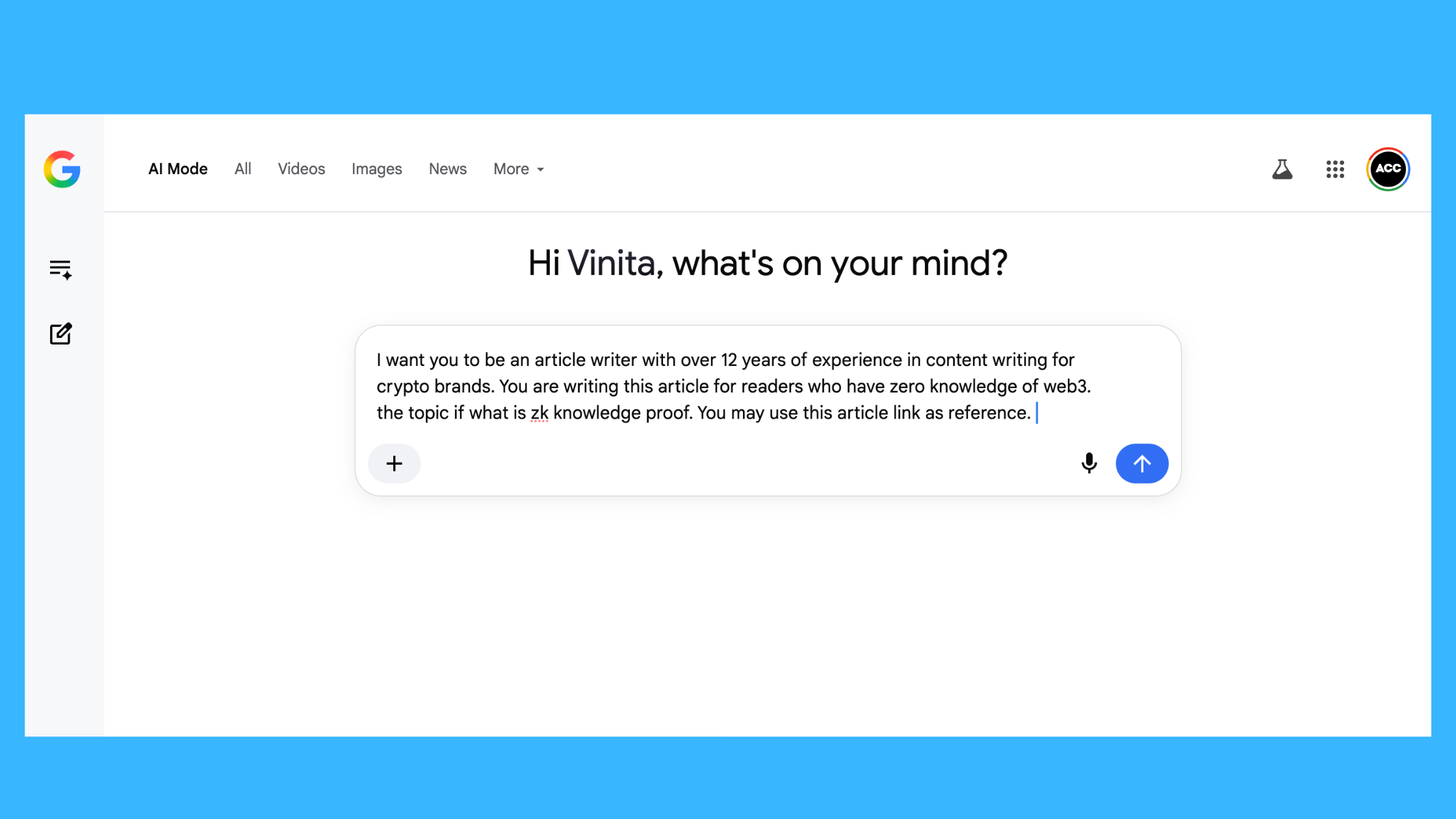
You find ai generated content dry and vague. This happens because the prompt given to the ai model is not defined well. According to a course by Google “Start Writing Prompts like a Pro” the 5 step prompt framework is one of the best ways to give the ai better context. Because better context means better input which results in enhanced output.
So How Should You Structure Your Prompt?
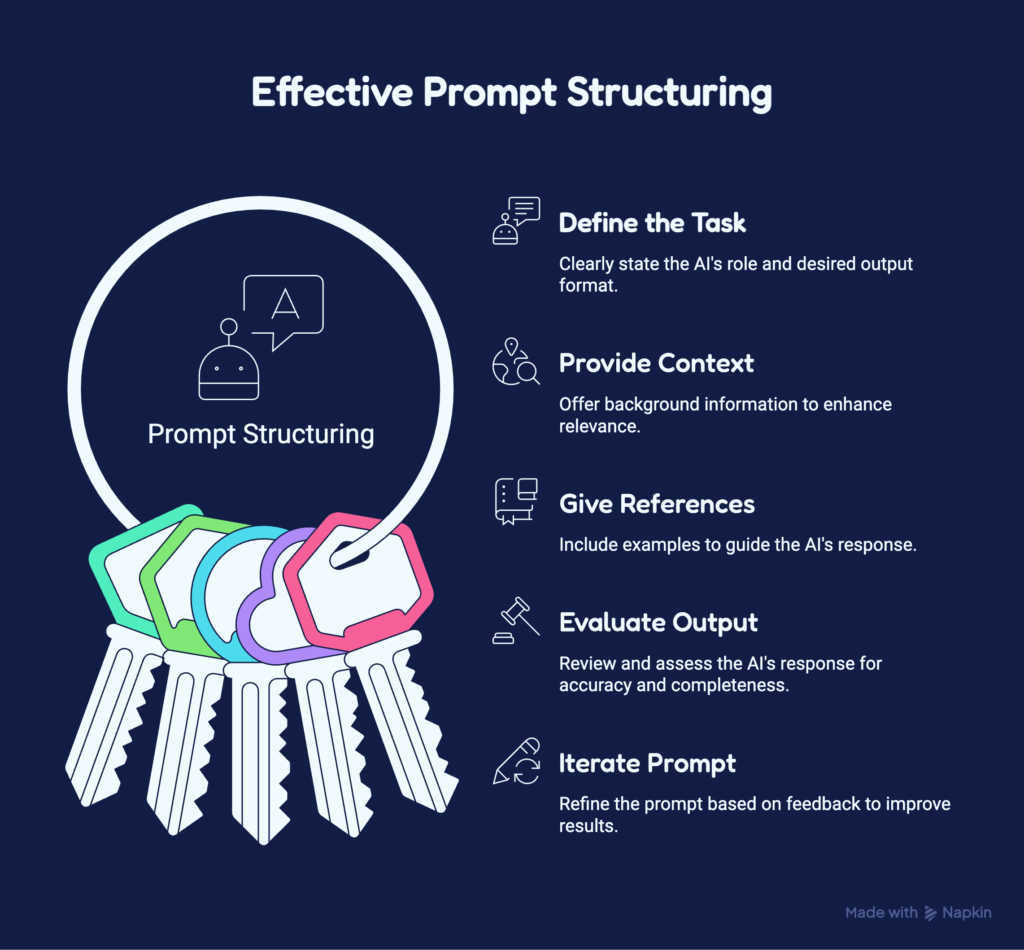
According to the course, the structure boils down to TCREI. This stands for Task, Context, References, Evaluation and Iterate.
Define The Task
Let me break this down for you. Task is the work that AI needs to do. You also need to give the AI bot a role or persona of your reader or buyer. (audience) A well-defined task should include both a persona and a preferred format.For example, you might ask it to respond as a professional speechwriter, a marketing executive with 15 years of experience, or even as if it were creating content for a specific audience such as customers, executives, or team members.
The more specific you are, the more tailored the response will be.
Next, give the AI the background information it needs to understand your request. Context often makes the difference between a generic response and a highly relevant one.
For example, instead of asking: “Give me some birthday gift ideas under $30.”
You could say:”Give me five birthday gift ideas under $30 for a 29-year-old who loves winter sports and recently switched from snowboarding to skiing.”
MultiModality – Give References
When available, provide examples, source materials, or reference points that can guide the AI’s response.
Continuing with the gift example, if you include examples of presents you’ve given in the past, the AI can better understand your preferences and recommend ideas that align with your style.
That said, references aren’t always necessary. In situations where you’re brainstorming, exploring abstract concepts, or looking for creative inspiration, you may not have specific reference materials to provide.
Evaluate What AI Produces
Once the AI generates a response, review it carefully. Ask yourself whether the prompt provided enough information to produce the result you were hoping for.
Consider:
- Is the response accurate?
- Does it address the task effectively?
- Is the format what you requested?
- Are any important details missing?
Iterate That Prompt
Prompting is rarely a one-and-done process. If the output isn’t quite right, refine your prompt and try again.
You might:
- Add more context.
- Clarify the desired format.
- Provide better references.
- Adjust the persona.
- Be more specific about your expectations.
Iteration is one of the most important skills in effective prompting. Small changes to your input can often lead to significantly better results.
Final Thoughts
There is no single “perfect” way to structure a prompt. The order of the elements matters less than the quality of the information you provide. As long as you’re thoughtfully creating really excellent inputs, you’ll greatly improve the quality of the outputs you receive.

About the Author
Vinita Mathreja
Vinita Mathreja is the founder of What The Web, where she covers artificial intelligence, emerging technologies, AI tools, and the evolving digital landscape. Her work focuses on making complex technological developments accessible to creators, professionals, and everyday users.